

-
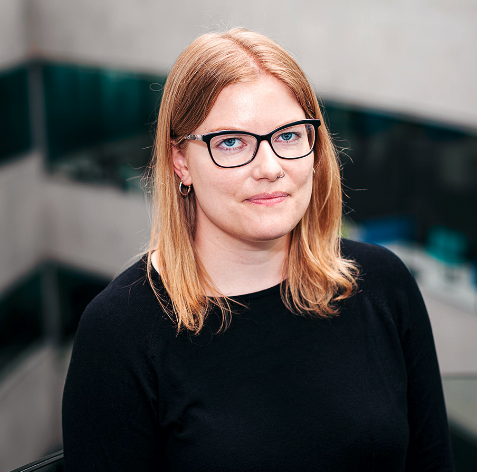
Jonatan Palmblad is a cross-disciplinary scholar primarily focusing on the workings of human–environment interaction, and the roles that psychology and technology play therein. He defended his PhD in Environmental Humanities at the Rachel Carson Center, LMU Munich, in 2023, and is currently senior editor at the Center. Jonatan’s interdisciplinarity encompasses fields like environmental history, philosophy, history of ideas, history of technology, human ecology, ecocriticism, and environmental psychology. He has a B.A. in Liberal Arts and an M.A. in History of Science and Ideas from the University of Gothenburg, Sweden. Currently, Jonatan works as a Lecturer and Project Coordinator for the Rachel Carson Center’s participation in Speak4Nature, an EU-funded research project on ecological justice, while serving as a board member for the International Consortium of Environmental History Organizations (ICEHO) and an associate editor for Environmental Humanities.
Email: Jonatan.palmblad@lmu.de
Website: https://www.carsoncenter.uni-muenchen.de/staff_fellows/admin/jonatan_palmblad1/
-
Mona Bieling is a historian with a keen interest in the connections between the environment and colonialism. She is particularly interested in the transfer of environmental knowledge between colonial projects and in non-human agency. Her research has focused on the intersection between landscape changes and power relations during the British Mandate in Palestine. She received her PhD from the International History and Politics Department at the Geneva Graduate Institute in Switzerland. Mona has worked as a Research and Teaching Assistant and has been a Landhaus Fellow of the Rachel Carson Center. In 2025, she is employed as a postdoctoral researcher and lecturer at HSU Hamburg.
Email: bielingm@hsu-hh.de
Website: https://www.hsu-hh.de/histec/mona-bieling

-
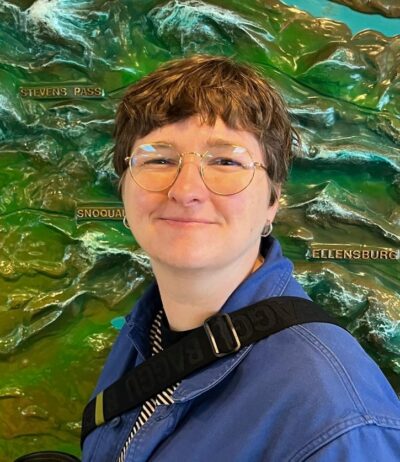
Sebastian Lundsteen (he/him) is an environmental historian and anthropologist currently working as a postdoctoral researcher at the Centre for Sustainable Futures at the University of Copenhagen. Here, he investigates the emergence of technological optimism in Danish climate politics by looking at Carbon Capture and Storage. He earned his PhD from The Greenhouse at the University of Stavanger, where he examined the intersection of chemical pollution, scientific expertise, and environmental justice in Denmark. Currently, he is in the process of converting his dissertation into a graphic novel with artist Asbjørn Skou. He is an ESEH regional representative for the Nordic Region and an appointed science policy fellow at the Queen Mary Center.
Email: sln@hum.ku.dk
Website: sebastianlundsteen.com
-
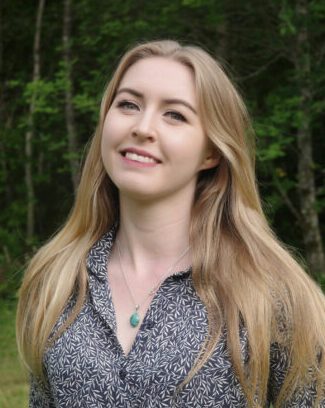
Aoife O’Leary McNeice is a Government of Ireland postdoctoral research fellow at the University of Galway/Ollscoil na Gaillimhe. She received her PhD in history from the University of Cambridge, and subsequently carried out a postdoctoral research fellowship at the University of Exeter, on the ‘Imagining Futures Through Un/Archived Pasts’ project. She is currently working on a more-than-human history of hydro-electricity in mid-century Ireland, focusing on the Rivers Lee, Liffey and Erne. Aoife is a social and environmental historian, particularly interested in water, energy, empire and inequality. They also explore the opportunities offered by environmental history methodologies to explore alternative archival and epistemological approaches to the past.
Email: aoife.olearymcneice@universityofgalway.ie
Website: https://aoifeolearymcneice.com/
-
Nike Stolpe Wikström is a PhD candidate in History of Ideas at Stockholm University, Sweden, with a background in psychology. Her research interests within the history of ideas lie primarily in human–animal relationships and the history of emotions. Her dissertation explores sensibility toward and through non-human animals in Sweden during the 18th century. She has worked and studied at several universities in Europe, including the Rachel Carson Center in Munich and the KTH Environmental Humanities Laboratory, engaging in interdisciplinary approaches to the environment and society. She is currently coordinating the Network for the Study of Emotions in Sweden. She has a B.A. in History of Ideas and a B.Sc. in Psychology from Lund University, and an M.A. in History of Ideas from the master’s programme in Critical Studies at the University of Gothenburg, Sweden.

-
Gilberto Mazzoli is a postdoctoral researcher in North American environmental history at the University of Konstanz, working within the ERC project “Off the Road.” His project, Collisions, examines the environmental history of roadkill in the United States and the role of automobility in shaping environmental knowledge. He holds a PhD in Modern History from the European University Institute. His dissertation, Portable Natures, is an environmental history of Italian migration through the lens of gardening, and the manuscript is under contract with the University of Pittsburgh Press. A longtime ESEH member, he serves on its Communication Committee. In 2024, he received the ESEH–Gale Fellowship in Digital Environmental Humanities.
Bluesky: @gilberto-mazzoli.bsky.social
Email: gilberto.mazzoli@uni-konstanz.de
Website: www.gilbertomazzoli.it

-
Jabulani Shaba is a postdoctoral researcher at the University of Groningen in the Netherlands in an ERC-funded AFREXTRACT project. His research focuses on how mining and oil extraction reshape environments, livelihoods, and political life in Sub-Saharan Africa. Drawing on ethnographic and archival research in Zimbabwe, Zambia, Nigeria, and South Africa, he analyses community environmentalism, gendered labour, protest movements, and everyday strategies for living with toxic landscapes. He has taught interdisciplinary courses on sustainability, development, and global history, and works closely with NGOs and policy institutions to translate research into accessible insights. His work is driven by a commitment to environmental justice, historically grounded analysis, and bridging academia, communities, and policy to shape more inclusive and sustainable futures.
Email: j.shaba@rug.nl
LinkedIn: Jabulani Shaba
-
Who we are
Inspired by the success of other academic societies in supporting their early-career members–such as through the ASEH Grad Caucus, the NiCHE New Scholars Network, and the Tensions of Europe Network (ToE)–the ESEH Board established its Next Generation Action Team (NEXTGATe) in June 2018. NEXTGATe aims to strengthen the presence and influence of early career scholars in the environmental history field in Europe and beyond, and to offer a space for frank, open discussions and collaboration among this group of environmental historians. Its work builds upon previous discussions on professional and financial uncertainty, the lack of visibility of the field in specific geographical contexts, and an inadequate professional network.
Read more HERE.
Latest news
- Call for Applications to Host the ESEH Conference 2029
- ESEH 2027 Salzburg Open Sessions List
- Call: ESEH 2027 St Andrews Article Prize in European Environmental History
- Call for Writing Support Program 2027
- Call for Papers: A World of a Thousand Cuts: Forests, Wood, and Industrialisation Across the Globe in the 19th and 20th Centuries